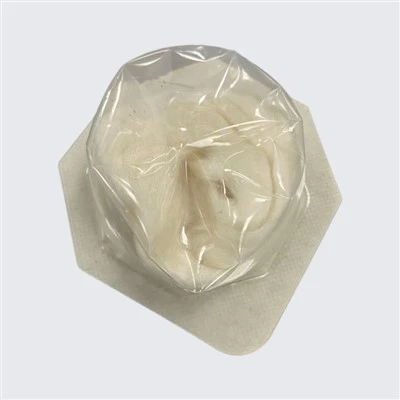




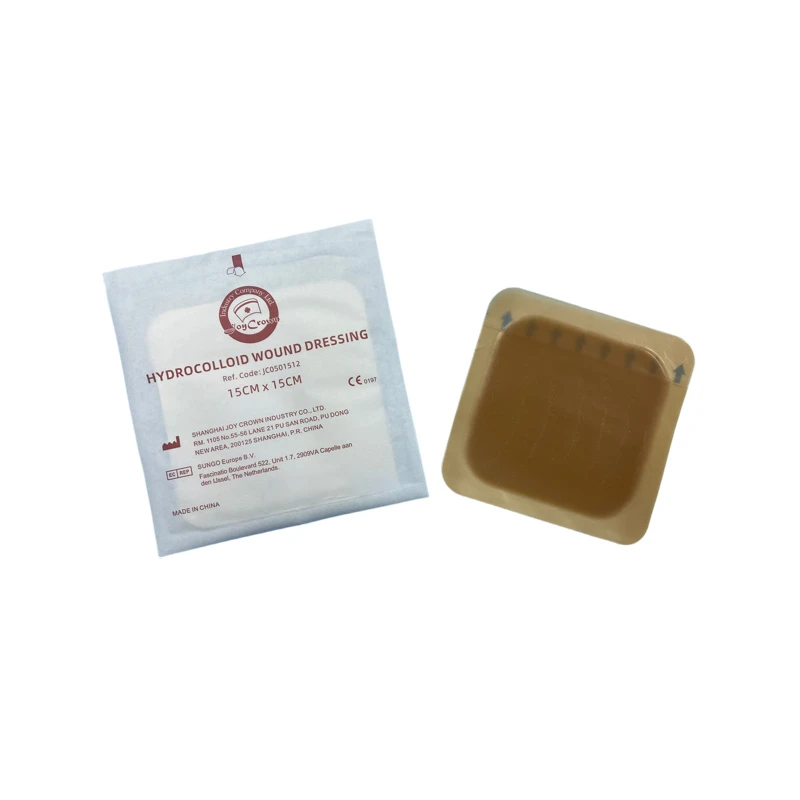
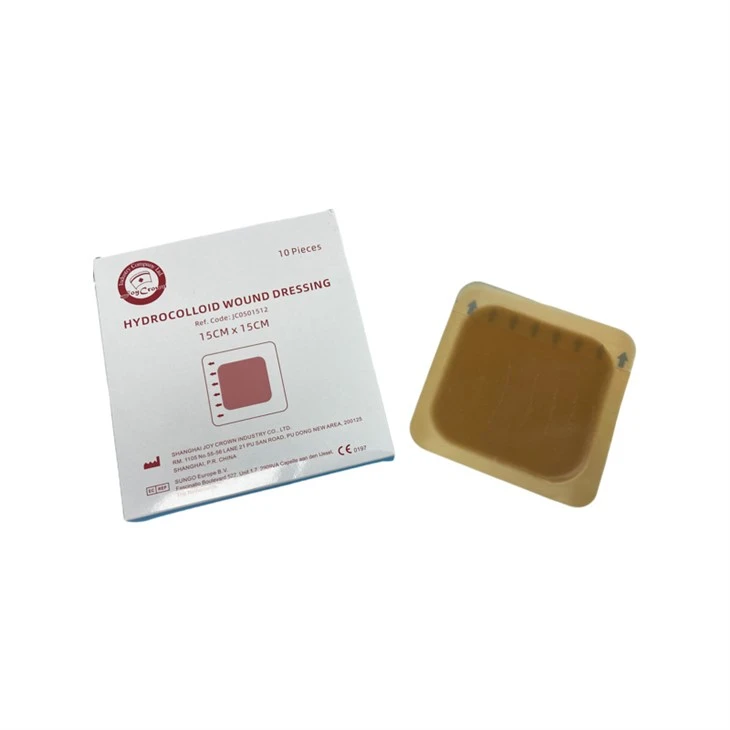


Hydrocolloid Wound Dressing
Hydrocolloid Wound Dressing can create a moist environment to superficial wounds with general exudate or wounds on sensitive skin. It combines absorption, gel formation, and self-adhesive coverage altogether. It is waterproof, no need for frequent dressing changing. It is easy to peel off, does not adhere to the wounds. Joy Crown Provides Hydrocolloid Dressing Extra Thin, Hydrocolloid Dressing With Border, Hydrocolloid Blister Plaster, and Acne Patch.
They have been approved by ISO13485, US FDA, SFDA MDMA and Philippines FDA certificates several years. And We provide OEM/ODM or Private Label Brand for the different customers, also for small MOQ.
Products Code: JC05015
Description
Catalogue No./Reference No./Products Code: JC05015
- Healthcare professionals will encounter a wide variety of wounds daily, such as superficial wounds, low-to-moderate exudate wounds, wounds on sensitive skin requiring prolonged coverage, minor burns, pressure injuries, and wounds that need a moist environment to facilitate the body's natural autolytic debridement process. How to select the appropriate dressing for these wounds is a daily challenge for medical staff.
- Relying solely on standard gauze dressing or non-woven dressing can lead to the wound surface becoming excessively dry, thereby compromising moist wound management. Conversely, other functional dressings-such as foam, silicone gel, or alginate dressings, as well as non-adherent options like Xeroform Petrolatum Gauze or circumcision wound dressings-may not always be the most suitable choice for these specific wound care needs.
- As a professional Hydrocolloid Wound Dressing manufacturer, supplier and factory in China, Joy Crown Medical has developed its Hydrocolloid Wound Dressing specifically for the above wounds with low-to-moderate exudate that require a moist environment, protection against external contamination, and a reduction in dressing change frequency. This Hydrocolloid Dressing is designed to provide a comprehensive solution that combines absorption, gel formation, and self-adhesive coverage.
What Is Hydrocolloid Wound Dressing?

Joy Crown Hydrocolloid Wound Dressing is an advanced wound dressing, consisting of an outer waterproof membrane, an inner hydrocolloid matrix, and a protective layer. The core component is carboxymethyl cellulose (CMC), which can absorb wound exudate and expand to form a gel barrier, thereby protecting the wound and having an autolytic debridement function.
Product Description:
- There is semi-permeable matte polyurethane or polyurethane foam to enhance the absorbency. Film thickness:0.025-0.035mm
- pH 5.7 Acid & Alkali Resistance pH 3-12.
- Hygroscopic capacity and hygroscopic capability can be adjusted according to clinical needs.
Our Medical Hydrocolloid Dressings come in a wide range of models, specifications, and product variations to meet the growing demands of the medical and beauty sectors. Key products include Hydrocolloid Dressing Extra Thin, Hydrocolloid Dressing With Border, Hydrocolloid Blister Plaster and Acne Patch. Different sizes and shapes are available for different clinical and application requirements. Each piece is packed by sterile pouch, sealed and sterilized by Gamma Radiation.
How Does Hydrocolloid Wound Dressing Work?
Hydrocolloid wound dressings mainly create a closed, moist and low-oxygen environment for wound healing, and at the same time, they utilize the body's own repair capabilities to accelerate the healing process. This can be understood from the following aspects:

Absorb the exudate and form a gel
- The inner layer of the Absorbent Hydrocolloid Dressing contains hydrophilic colloid particles (such as sodium carboxymethyl cellulose, gelatin, pectin, etc.). When these particles come into contact with the wound, they will form a gel to keep the wound moist but not soaked. The gel can also lock the growth factors and enzymes in the exudate, allowing them to continuously act on the wound.
Barrier for prevention of infection
- The outer layer of the Self-Adhesive Hydrocolloid Wound Dressing is a layer of polyurethane film, used for waterproofing and preventing external contamination from entering the wound.
Low oxygen environment, promoting angiogenesis
- The closed dressing will reduce the oxygen partial pressure on the wound surface, creating a relatively low-oxygen environment, which promotes wound healing.
Autolytic debridement
- In a moist and closed environment, it softens necrotic tissue and crusts. The body's own macrophages and enzymes (such as collagenase) gradually decompose the necrotic tissue.
Hydrocolloid Dressing for Low to Moderate Exudate
Based on their properties-absorption, gel formation, maintenance of a moist environment, and provision of external protection-Joy Crown Medical hydrocolloid dressings are particularly suitable for wounds with low to moderate exudate that require sustained moisture and protection. Depending on the wound status and clinical care requirements, the following scenarios are primary considerations:


During the granulation stage and epithelial migration phase of the wound
- A moist and sealed environment is most conducive to the formation of granulation tissue and epithelium.
The wound has a small amount of necrosis/crust, but no infection
- The hydrocolloid can maintain moisture and promote the dissolution of necrotic tissue by the body's own enzymes.
The wound requires pain relief and friction prevention (such as venipuncture sites, crusting of chickenpox/zoster)
- The hydrocolloid can act as a buffer and isolate external stimuli.
Clinical Applications of Hydrocolloid Wound Dressing
Joy Crown Medical Hydrocolloid Wound Care products are primarily indicated for wounds with low to moderate exudate levels, such as:
-
Acute wounds
Superficial burns and donor sites: Applicable for superficial to medium-thickness skin lesions in burns, as well as donor sites for skin grafting surgeries.
Post-operative and trauma: Used for surgical incisions, skin abrasions, lacerations, etc., which can promote healing and may reduce scar formation.
Skin tears: Can be used to maintain the apposition of lacerated skin edges.
-
Chronic wounds
Pressure injuries (Pressure ulcers): Particularly suitable for the prevention and treatment of stage 1 and stage 2 pressure injuries.
Lower extremity ulcers: Such as lower extremity venous ulcers, can be used under compression therapy.
Diabetic foot ulcers: Requires professional assessment for use.
-
Dermatological applications
Facial dermatitis and acne: Hydrocolloid dressings may play a role in the treatment of facial dermatitis and common acne (Acne Patch).

Key Features of Hydrocolloid Dressing
As a Chinese Hydrocolloid Dressing manufacturer and supplier, Joy Crown Medical exercises precise control over Gamma sterilization levels and product color, effectively meeting the quality requirements of diverse markets. These dressings offer the following features and benefits:


- It is made of gelatin, carboxymethyl cellulose, pectin, and an occlusive backing and a protective layer.
- Excellent exudate absorption capability.
- Keep the wound in a moist environment, promote wound healing, effectively relieve pain and reduce wound care frequency.
- Water-proof, protect the wound from microbial invasion.
- Excellent elasticity and self-adhesive, convenient and comfortable to wear.
- Easy to peel off, no adherence to wound, so effectively reduce the potential damage and pain.
- Available in different sizes and shapes to meet the clinical needs.
- Individual Package and Gamma Sterilization.
- 5 Years Shelf Life.
Hydrocolloid Wound Dressing: Extra Thin & Bordered Options
Joy Crown Medical provides different hydrocolloid dressing designs to meet different wound locations, coverage requirements and dressing preferences.Ultra-Thin Hydrocolloid Dressing and Hydrocolloid Bordered Dressing are our main products.

Extra Thin Hydrocolloid Dressing
Our Ultra-Thin Hydrocolloid Dressing thickness is about 0.5 mm, without border design. This thinner design makes it suitable for applications where a lower-profile dressing is preferred, such as the bridge of the nose, cheekbones, or behind the ears, while still providing wound coverage and moisture management. It is suitable for superficial abrasions, first-degree burns, and wounds nearing recovery. The sizes are from 3cm x 3cm to 20cm x 20cm.
The wide size range allows distributors and healthcare providers to select a suitable dressing according to the wound size and required coverage area.
Hydrocolloid Bordered Dressing
The Bordered Hydrocolloid Dressing has a thickness of approximately 1.0 ~ 1.5 mm and bordered edge, the border width is approximately 10% of the dressing size. Compared with the Extra Thin version, it has a thicker hydrocolloid structure and an integrated adhesive border around the dressing.
The edge sealing is better, can provide stronger fixing force, and is not easy to curl, because there is a ring around it to fix it. Mainly used on wounds with low to moderate exudation, or joints, or areas that are difficult to fix, to avoid easy rubbing off.
Usage scenarios: suturing wounds after surgery, small area shallow burns, and pressure ulcers.
The sizes are from 5cm x 5cm to 20cm x 20cm.
Extra Thin vs. Bordered Hydrocolloid Dressing
The two designs are mainly differentiated by their thickness, structure and border design. The appropriate option can be selected according to the wound size, location and coverage requirements.
|
Option |
Approx. Thickness |
Main Design |
Typical Applications |
Available Sizes |
|
Extra Thin Hydrocolloid Dressing |
Approx. 0.5 mm |
Thin hydrocolloid dressing without an integrated border |
Low-exudate wounds, minor wounds, superficial burns, skin protection, areas where a thinner dressing is preferred |
3 × 3 cm to 20 × 20 cm |
|
Bordered Hydrocolloid Dressing |
Approx. 1.0–1.5 mm |
Hydrocolloid dressing with an integrated adhesive border |
Low to moderate exudate wounds, pressure injuries, post-operative wounds, wounds requiring additional fixation |
5 × 5 cm to 20 × 20 cm |
- For distributors and medical supply buyers, Joy Crown can provide different sizes and product configurations according to market requirements. OEM and private-label options can also be discussed for specific projects.
- In addition to standard wound dressing formats, Joy Crown Medical can also supply hydrocolloid products in specific shapes and formats, including Hydrocolloid Patches and Acne Patch, depending on application requirements.
Hydrocolloid Wound Dressing vs Other Advanced Wound Dressings
Joy Crown Medical offers a wide range of advanced wound dressings, each with distinct functions and intended uses. Given this extensive product lineup, when should you choose a hydrocolloid dressing for wound care? Below is a comparison between Joy Crown Hydrocolloid Wound Dressing and other advanced wound dressings.
|
Dressing Type |
Main Exudate Level |
Main Function |
Typical Application |
|
Hydrocolloid Wound Dressing |
Low to Moderate |
Absorbs exudate, forms a gel, maintains a moist environment and provides self-adhesive protection |
Superficial wounds, minor wounds, superficial burns, low to moderate exudate wounds |
|
Alginate Wound Dressing |
Moderate to Heavy |
High absorption and gel formation; suitable for irregular and cavity wounds |
Heavily exuding wounds, deep or cavity wounds, bleeding wounds |
|
Foam Dressing Non Adhesive |
Moderate to High |
Absorbs exudate and provides cushioning and protection |
Moderate to heavily exuding wounds, pressure injuries, post-surgical and traumatic wounds |
|
Silicone Foam Dressing |
Moderate to High |
Exudate absorption with a soft silicone contact layer for atraumatic removal |
Fragile skin, pressure injuries, post-surgical wounds |
|
Foam Dressing With Silver |
Moderate to High |
Exudate absorption combined with silver antimicrobial function |
Wounds requiring antimicrobial management |
|
Silicone Foam Dressing With Silver |
Moderate to High |
Combines silicone contact, exudate absorption and silver antimicrobial function |
Wounds requiring antimicrobial management with atraumatic dressing removal |
|
Hydrogel Wound Dressing |
Dry to Low |
Provides moisture and helps rehydrate dry wound tissue |
Dry or minimally exuding wounds |
|
Wound Contact Layer |
- |
Protects the wound bed and allows exudate to pass through to a secondary dressing |
Fragile wounds, skin grafts, donor sites and wounds requiring a non-adherent interface |
|
Silicone Superabsorbent Dressing |
Very High |
High-capacity exudate management with silicone contact layer |
Heavily exuding wounds requiring high absorption |
|
CMC Dressing |
Moderate to Heavy |
Rapid absorption and gel formation for exudate management |
Moderate to heavily exuding wounds |
The most appropriate dressing depends on wound condition, exudate level, wound location and clinical requirements. Hydrocolloid Wound Dressing is one option within the advanced wound dressing range and is particularly suitable for low to moderate exudate wounds requiring a moist and protected environment.
Product Specifications
Joy Crown Hydrocolloid Wound Dressings primarily consist of three main product categories and one derivative product: Hydrocolloid Dressing Extra Thin, Hydrocolloid Dressing With Border, Hydrocolloid Blister Plaster, and the derivative product, Acne Patch.
Material: an outer waterproof membrane, an inner hydrocolloid matrix, and a protective layer
Packaging
Sterile sealed pouch
Sterilization
Gamma sterilized
Shelf life
5 years
Joy Crown Extra Thin Hydrocolloid Dressing
- Thickness: Approx. 0.5 mm
- Color : Pale Yellow
- A wide range of sizes:
| 3 cm × 3 cm | 5 cm × 5 cm | 5 cm × 10 cm | 5 cm × 15 cm |
| 5 cm × 20 cm | 7.5 cm × 7.5 cm | 10 cm × 10 cm | 15 cm × 15 cm |
| 15 cm × 20 cm | 20 cm × 20 cm |
Joy Crown Hydrocolloid Dressing With Border
Thickness: 1.0 ~ 1.5 mm
Color: Skin to deep skin color
A wide range of sizes:
| 5 cm × 5 cm - 0.5 cm border | 7.5 cm × 7.5 cm - 0.75 cm border | 8 cm × 12 cm | 10 cm × 10 cm - 1.0 cm border |
| 15 cm × 15 cm - 1.5 cm border | 15 cm × 18 cm | 15 cm × 20 cm | 20 cm × 20 cm - 2.0 cm border |
Joy Crown Hydrocolloid Blister Plaster
Thickness: 1.0-1.5 mm
Color : Skin color
A wide range of sizes:
| 17mm x 48mm | 20mm x 60mm | 20mm x 65mm | 25mm x 65mm | 28mm x 46mm |
| 28mm x 69mm | 44mm x 69mm | 17mm x 60mm | 30mm x 60mm | 55mm x 37mm |
| 41mm x 41mm | 18mm x 60mm | 42mm x 62mm | 50mm x 50mm |
Why Choose Joy Crown Hydrocolloid Wound Dressing?

Joy Crown Medical has been manufacturing and supplying Extra Thin Hydrocolloid Dressings and Bordered Hydrocolloid Dressings for many years, with stable product quality and sufficient production capacity to support regular and larger-volume orders.
In recent years, we have also developed Hydrocolloid Blister Plaster and Acne Patch based on our hydrocolloid product technology. These products have been widely supplied to the e-commerce market and have received good market acceptance.
Our Hydrocolloid Wound Dressings have obtained ISO 13485 certification and SFDA MDMA certification, and are registered with the US FDA and the Philippines Department of Health. Our products are exported to markets in the Middle East, South America, Southeast Asia and Africa.
For distributors, medical supply companies and private-label customers, Joy Crown Medical can provide different hydrocolloid dressing formats, sizes and product configurations according to market requirements. OEM and private-label cooperation are also available, together with the relevant product and technical documentation.
fAQS
Q1: What is a Hydrocolloid Wound Dressing?
A: Hydrocolloid wound dressings are advanced wound dressings, consisting of an outer waterproof membrane, an inner hydrocolloid matrix, and a protective layer. The core component is carboxymethyl cellulose (CMC), which can absorb wound exudate and expand to form a gel barrier, thereby protecting the wound and having an autolytic debridement function.
Q2: What is a Hydrocolloid Dressing used for?
A: Absorb exudate
Absorb a small to moderate amount of wound exudate, forming a gel to prevent leakage of the exudate.
Maintain moist healing
Maintain the wound in a moist state to accelerate the migration of epidermal cells and wound closure.
Autolytic debridement
Soften necrotic tissue and scabs, allowing the body's own enzymes and cells to gradually remove them.
Protect the wound
The outer layer is waterproof and bacteriostatic, reducing external contamination and friction stimulation.
Relieve pain
A closed environment reduces the exposure of nerve endings, making it less likely to tear the newly formed tissue during dressing changes.
Reduce the frequency of dressing changes
It can usually be left in place up to 7 days, reducing repeated interference with the wound.
Q3: When should a Hydrocolloid Dressing be used?
A: Acute wounds
Superficial burns and donor sites: Applicable for superficial to medium-thickness skin lesions in burns, as well as donor sites for skin grafting surgeries.
Post-operative and trauma: Used for surgical incisions, skin abrasions, lacerations, etc., which can promote healing and may reduce scar formation.
Skin lacerations: Can be used to maintain the apposition of lacerated skin edges.
Chronic wounds
Pressure injuries (pressure ulcers): Particularly suitable for the prevention and treatment of stage 1 and stage 2 pressure injuries.
Lower extremity ulcers: Such as lower extremity venous ulcers, can be used under a pressure treatment system.
Diabetic foot ulcers: Requires professional assessment for use.
Dermatological applications
Facial dermatitis and acne: Hydrocolloid dressings may play a role in the treatment of facial dermatitis and common acne.
Q4: Is Hydrocolloid Dressing suitable for moderate to heavy exudate?
A: No. The absorbency of hydrocolloid dressings is limited, capable of absorbing only a small to moderate amount of exudate. It achieves this by forming a gel through contact with the exudate to maintain a moist healing environment. For severe exudation wounds, hydrocolloid is unable to effectively manage the large amounts of exudate.
Q5: Can Hydrocolloid Dressings be used for dry wounds or wounds with very little exudate?
A: It can be used, but not all hydrocolloid dressings are suitable. The Extra Thin Hydrocolloid Dressing is a product specifically designed for this purpose.
Q6: How to determine when a hydrocolloid dressing needs to be replaced?
A: To determine whether a hydrocolloid dressing needs to be replaced, three phenomena should be observed: whether the exudate is saturated or leaking, whether the hydrocolloid dressing has lost its sealing property, and whether it has reached the single-use validity period of the product.
When any of the following situations occurs, it is necessary to replace the dressing:
Exudate saturation or bulging
When the hydrocolloid dressing absorbs the exudate, it will turn white and bulge. When the white gel area exceeds 1/2 to 2/3 of the dressing area, or the dressing is significantly bulging, it indicates that the absorption capacity is approaching the limit. By pressing the dressing with your fingers, if the indentation cannot return to its original state, it means it has become saturated and needs to be replaced.
Edge leakage or lifting
If you see exudate from the wound leaking from the edge of the dressing, or if the edge of the dressing is frayed, lifted, and no longer sealed, it is necessary to replace it immediately. Leakage indicates a failure of the barrier function, and the risk of infection will increase.
Reaching the product's validity period
If the exudate from the wound is very little, the hydrocolloid dressing can be left in place for up to 7 days. After 7 days, it is necessary to replace it.
Hot Tags: hydrocolloid wound dressing, China hydrocolloid wound dressing manufacturers, suppliers, factory
Send Inquiry
You Might Also Like