

NEW COMMERCIAL WIPES INHIBIT THE ADHESION AND DISPERSION OF S. AUREUS AND P. AERUGINOSA BIOFILMS
Leave a message
Paola Di Fermo1†*, Firas Diban2†, Kelvin Yu3, Simonetta D'Ercole1, Silvia Di Lodovico2, Mara Di Giulio2 and Luigina Cellini2
1 Department of Medical, Oral and Biotechnological Sciences, University of "G. d'Annunzio" Chieti‐Pescara, 66100 Chieti, Italy
2 Department of Pharmacy, University of "G. d'Annunzio" Chieti‐Pescara, 66100 Chieti, Italy
3 Shanghai Joy Crown Industry Co., Ltd, Shanghai, China
Correspondence:
These authors contributed equally
Background
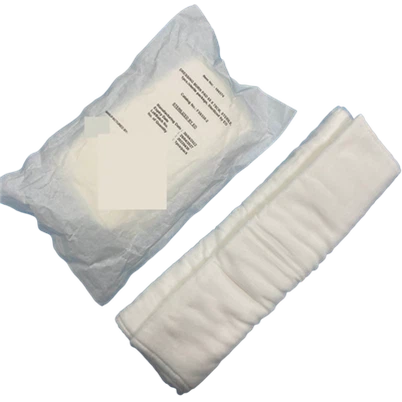
Bacterial biofilms represent a significant burden in hospital environments. This work reported the application of new commercial wipes against Staphylococcus aureus and Pseudomonas aeruginosa biofilms, representing a potential method of controlling microbial biofilm formation.This experimental study aims to assess the efficacy of new commercial wipes (Shanghai Joy Crown Industry Co., Ltd), usually used for the disinfection of medical surfaces, in order to inhibit the adhesion and dispersion of S. aureus and P. aeruginosa biofilms, that represent two important nosocomial pathogens in hospital-acquired infections.
Methods
The effect of Shanghai Joy Crown wipes against the formed biofilm of S. aureus ATCC 6538 and P. aeruginosa ATCC 15442 was studied on a PVC surface, performing the test according to a modified standard EN 16615:2015. The effect of the wipes against the biofilms (both in formation and mature) was expressed in Log10 CFU/mL reduction and the cell viability was evaluated through live/dead staining. It was also evaluated the antibiofilm formation activity of the product over time (3h and 24h), and the bacterial load was expressed in CFU/mL reduction.
Results
Shanghai Joy Crown wipes revealed a significant antibiofilm activity produced by both microbial detected species with the most effection in formation and mature S. aureus biofilms. Shanghai Joy Crown wipes are also able to avowing the biofilm dispersion in the PVC surfaces.Live/dead images showed double activity including disaggregation of the bacterial clusters and a killing action of both S. aureus and P. aeruginosa formed biofilm. The antibiofilm formation action of the wipes has its maximum effect with short time treatment (3 h) in respect to 24h treatment.
Conclusions
Our results showed that the wipes decreased the biofilm count after the application on PVC surface using mechanical action against both in-formation and formed biofilms containing the microbial biofilm dispersion. These data clearly highlight the importance of repeated cleaning application healthcare facilities in order to prevent the colonization and spread of nosocomial pathogens.
Keywords
Environmental biofilms; Staphylococcus aureus; Pseudomonas aeruginosa; antimicrobial wipes; nosocomial infections; disinfection; antibiofilm activity; didecyl-dimethyl ammonium chloride; o-phenyl-phenol.