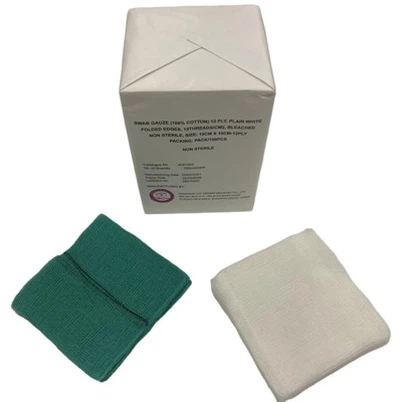

Do sterile gauze compresses stick to the wound?
Leave a message

Do sterile gauze compresses stick to the wound? This is a question that often comes up in the medical field and among patients who are dealing with wounds. As a supplier of Sterile Gauze Compresses, I have encountered this query numerous times, and in this blog post, I aim to provide a comprehensive answer.
Understanding the Nature of Sterile Gauze Compresses
Sterile gauze compresses are a staple in wound care. They are made from a soft, absorbent material, typically cotton, that has been carefully processed to remove any potential contaminants. The sterility of these compresses is crucial as it helps prevent infections in the wound. They are designed to absorb exudate, the fluid that comes out of a wound, and keep the wound environment clean.
The structure of the gauze is composed of multiple layers of fine threads woven together. This structure provides a large surface area for absorption. However, it is this very structure that can sometimes lead to the gauze sticking to the wound.


Factors Contributing to Gauze Sticking to the Wound
- Exudate Drying: When the exudate from a wound dries on the surface of the sterile gauze compress, it can cause the gauze to adhere to the wound. Exudate contains proteins, cells, and other substances. As the moisture evaporates, these components form a sticky residue that binds the gauze to the wound bed.
- Wound Type: Certain types of wounds are more prone to causing the gauze to stick. For example, wounds with a high level of granulation tissue, which is the new connective tissue and tiny blood vessels that form on the surfaces of a wound during the healing process, can have a greater tendency to adhere to the gauze. Additionally, wounds that are deep or have irregular surfaces may trap the gauze fibers more easily.
- Gauze Material and Quality: The quality and material of the gauze can also play a significant role. Lower - quality gauze may have rough edges or uneven weaving, which can increase the likelihood of it sticking to the wound. Some gauze materials may also react more strongly with the wound exudate, leading to adhesion.
- Length of Time in Place: The longer a sterile gauze compress is left on a wound, the more likely it is to stick. As time passes, the exudate has more time to dry and form a bond with the gauze.
Consequences of Gauze Sticking to the Wound
- Pain and Trauma: Removing a stuck gauze from a wound can be extremely painful for the patient. It can also cause trauma to the newly formed tissue in the wound, potentially delaying the healing process. This trauma can lead to bleeding, increased inflammation, and a higher risk of infection.
- Infection Risk: When the gauze is forcefully removed from the wound, it can break the delicate skin barrier that is forming during the healing process. This exposes the wound to external contaminants, increasing the risk of infection.
- Healing Delay: Any disruption to the normal healing process, such as the trauma caused by removing stuck gauze, can slow down the formation of new tissue and the closure of the wound.
Preventing Gauze from Sticking to the Wound
- Use of Barrier Agents: Applying a thin layer of a barrier agent, such as petroleum jelly or a specialized wound - contact layer, between the wound and the gauze can prevent adhesion. These agents create a slippery surface that allows the gauze to be removed without sticking.
- Proper Moisture Management: Keeping the wound at an optimal level of moisture can reduce the drying of exudate and thus prevent the gauze from sticking. This can be achieved by using a moist wound dressing or by regularly changing the gauze to prevent excessive exudate accumulation.
- Choosing the Right Gauze: Selecting high - quality sterile gauze compresses with a smooth surface and appropriate absorbency is essential. Some gauzes are specifically designed to be non - adherent, which can significantly reduce the risk of sticking.
Our Sterile Gauze Compresses as a Solution
At our company, we understand the importance of providing sterile gauze compresses that minimize the risk of sticking to the wound. Our Sterile Gauze Compresses are made from high - quality cotton with a fine and even weave. This ensures a smooth surface that is less likely to catch on the wound.
We also offer a range of non - adherent options for our gauze compresses. These non - adherent products are treated with special coatings or have a unique design that prevents them from sticking to the wound while still maintaining excellent absorbency.
In addition to our sterile products, we also supply Non Sterile Gauze Swabs for less critical applications. These swabs are suitable for general cleaning and pre - wound care procedures.
Contact Us for Procurement
If you are in the market for high - quality sterile gauze compresses or non - sterile gauze swabs, we invite you to contact us. We are committed to providing the best products and services to meet your wound care needs. Whether you are a hospital, a clinic, or a distributor, we can offer you competitive prices and reliable supply. Reach out to us to start a discussion about your procurement requirements and how our products can benefit your operations.
References
- "Wound Care Essentials: Practice Principles" by Mary Lou Sole, et al.
- "Textbook of Wound Care" by Christopher M. Harding, et al.