
Are non sterile gauze swabs easy to cut?
Leave a message

Are non sterile gauze swabs easy to cut?
As a supplier of non sterile gauze swabs, I often encounter inquiries from customers regarding various aspects of our products. One frequently asked question is whether non sterile gauze swabs are easy to cut. In this blog, I will address this question in detail, combining my knowledge and experience in the field.
First of all, let's understand what non sterile gauze swabs are. Non sterile gauze swabs are made from cotton gauze and are mainly used in non - critical applications where strict sterility is not required. They are commonly used in general cleaning, first - aid treatments at home or in educational settings. These swabs come in different sizes and thicknesses, which can have an impact on their ease of cutting.
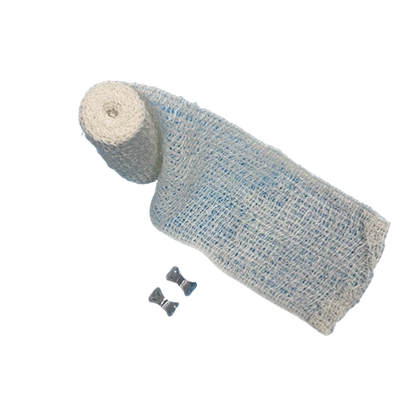
The ease of cutting non sterile gauze swabs largely depends on the quality of the gauze material itself. High - quality non sterile gauze swabs are made from fine - woven cotton. These cottons have a uniform fiber structure, allowing for a much cleaner cut. When you use a sharp pair of scissors on such a swab, the blades can smoothly separate the fibers, resulting in a precise cut without fraying or leaving loose threads. For example, our Non Sterile Gauze Swabs are crafted from premium cotton. The weaving process ensures that the fibers are well - aligned, making them particularly easy to cut.
The type of scissors or cutting tools also plays a crucial role. A pair of dull scissors will struggle to cut through the gauze cleanly. The dull blades will crush the fibers rather than slicing through them, leading to a ragged edge. On the contrary, sharp, pointed scissors, such as surgical - grade scissors, are ideal for cutting non sterile gauze swabs. They can easily penetrate the fabric and provide a smooth cut. Moreover, the length of the scissors' blades matters. Longer blades can cover more area at once, which is helpful when you need to cut larger swabs.
Another factor to consider is the texture of the non sterile gauze swab. Some swabs may have a thicker or more densely woven texture. These are typically used for more heavy - duty cleaning tasks. While the denser texture gives the swab more durability, it can be a bit more challenging to cut compared to thinner, lighter - weight swabs. However, with the right cutting tool, even a thick non sterile gauze swab can be cut effectively. You may need to apply a bit more pressure, but as long as the scissors are sharp, cutting should not be an issue.
The humidity in the environment can also affect the cutting process. If the air is very dry, the fibers of the gauze may become brittle, making them easier to cut but also more prone to breaking or developing small splinters. On the other hand, in a humid environment, the fibers may absorb moisture and become slightly more pliable. This can sometimes make the cutting process a bit more difficult as the scissors need to work through the softer, damp material. However, this effect is usually minor and can be compensated for by adjusting the cutting technique.
When it comes to cutting patterns, if you need to cut the non sterile gauze swabs into specific shapes, such as squares or circles, it is important to mark the cutting lines first. You can use a pen or a piece of tailor's chalk to clearly indicate where you want to cut. This ensures accuracy, especially when multiple pieces need to be cut to the same size. For example, in a first - aid training course, instructors often cut the non sterile gauze swabs into small, uniform squares for students to practice wound - dressing techniques.
Comparatively, non sterile gauze swabs are generally easier to cut than Sterile Gauze Compresses. Sterile gauze compresses are designed for use in more critical medical applications, such as surgical procedures. They often have a very tight and uniform weave to maintain sterility and prevent lint or fibers from shedding. This tight weave can make them more challenging to cut cleanly. Non sterile gauze swabs, being used in less critical scenarios, are usually made with a looser weave, facilitating easier cutting.
In conclusion, non sterile gauze swabs are generally easy to cut, especially when you have high - quality products and the right cutting tools. At our company, we strive to provide non sterile gauze swabs that are not only of the highest quality but also user - friendly in terms of cutting and other usage aspects.
If you are interested in our non sterile gauze swabs or have any questions about cutting them or using them in your specific application, do not hesitate to contact us for procurement discussions. We are committed to offering you the best - suited solutions for your needs.
References:


- "Medical Textiles: Materials and Applications" by David L. Kaplan
- "Textile Science" by Cheryl A. Rohrbach