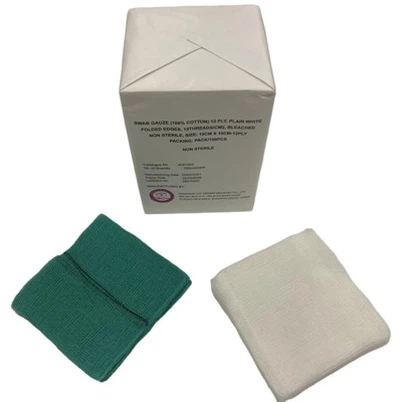

How do non sterile gauze swabs compare to sponges?
Leave a message

In the field of medical and industrial applications, the choice between non sterile gauze swabs and sponges is a crucial decision that can significantly impact the effectiveness and safety of procedures. As a supplier of Non Sterile Gauze Swabs, I have witnessed firsthand the diverse needs and preferences of our customers. This blog aims to provide a comprehensive comparison of non sterile gauze swabs and sponges, exploring their characteristics, advantages, and limitations to help you make an informed decision.
Composition and Material
Non sterile gauze swabs are typically made from cotton or a blend of cotton and synthetic fibers. The gauze fabric is woven in a way that allows it to absorb liquids effectively while maintaining its structural integrity. This makes it ideal for tasks such as cleaning wounds, applying medications, and collecting samples. On the other hand, sponges can be made from a variety of materials, including cellulose, polyurethane, and polyester. Each material has its own unique properties, such as absorbency, softness, and durability.
Absorbency
One of the key factors to consider when choosing between non sterile gauze swabs and sponges is their absorbency. Non sterile gauze swabs are known for their high absorbency due to the porous nature of the gauze fabric. They can quickly soak up liquids, making them suitable for applications where rapid absorption is required. Sponges, on the other hand, can have varying levels of absorbency depending on the material and design. Some sponges are designed to be highly absorbent, while others may be more suitable for light cleaning or applying small amounts of liquid.
Texture and Softness
The texture and softness of non sterile gauze swabs and sponges can also affect their performance and comfort. Non sterile gauze swabs are generally soft and gentle on the skin, making them suitable for use on sensitive areas. The smooth texture of the gauze fabric reduces the risk of irritation and abrasion. Sponges, on the other hand, can have a range of textures, from soft and plush to firm and abrasive. The choice of texture depends on the specific application and the user's preference.
Durability and Reusability
Durability and reusability are important considerations, especially in industrial and healthcare settings where cost-effectiveness is a priority. Non sterile gauze swabs are typically single-use products, which means they are discarded after use. This helps to prevent the spread of infection and ensures the safety of the user. Sponges, on the other hand, can be reusable depending on the material and design. Some sponges can be washed and reused multiple times, which can save money in the long run. However, it is important to ensure that the sponge is properly cleaned and disinfected between uses to prevent the growth of bacteria.
Application Specificity
Non sterile gauze swabs and sponges are designed for different applications, and their suitability depends on the specific task at hand. Non sterile gauze swabs are commonly used in medical settings for wound care, specimen collection, and medication application. They are also used in industrial applications for cleaning and degreasing. Sponges, on the other hand, are more versatile and can be used for a wide range of applications, including cleaning, painting, and applying cosmetics.


Cost
Cost is another important factor to consider when choosing between non sterile gauze swabs and sponges. Non sterile gauze swabs are generally less expensive than sponges, especially when purchased in bulk. This makes them a cost-effective option for applications where large quantities are required. Sponges, on the other hand, can vary in price depending on the material, size, and quality. Some high-quality sponges can be more expensive, but they may offer better performance and durability.
Safety Considerations
Safety is always a top priority when using non sterile gauze swabs and sponges, especially in medical and healthcare settings. Non sterile gauze swabs are designed for non-sterile applications and should not be used in situations where sterility is required. If sterility is a concern, Sterile Gauze Compresses should be used instead. Sponges, on the other hand, can pose a risk of contamination if not properly cleaned and disinfected. It is important to follow the manufacturer's instructions for cleaning and maintenance to ensure the safety of the user.
Conclusion
In conclusion, non sterile gauze swabs and sponges have their own unique characteristics, advantages, and limitations. The choice between the two depends on the specific application, the user's preferences, and the budget. As a supplier of non sterile gauze swabs, I understand the importance of providing high-quality products that meet the needs of our customers. If you have any questions or need further information about our non sterile gauze swabs or other products, please do not hesitate to contact us. We are always happy to assist you with your procurement needs and help you find the best solution for your specific requirements.
References
- Medical Textbooks on Wound Care
- Industrial Cleaning and Maintenance Guides
- Manufacturer's Product Specifications and Data Sheets