
How does a cotton stretch bandage perform in cold weather?
Leave a message

Hey there! As a supplier of cotton stretch bandages, I've gotten a bunch of questions about how these bandages perform in cold weather. So, I thought I'd dive into this topic and share what I know.
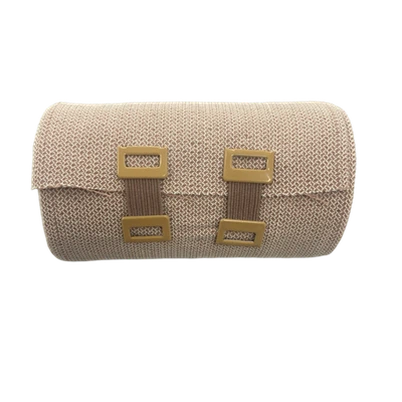
First off, let's talk about what a cotton stretch bandage is. It's a type of elastic bandage made mainly from cotton. These bandages are super popular because they're breathable, flexible, and can be used for all sorts of things, like supporting joints, wrapping injuries, or even for first - aid purposes.
When it comes to cold weather, one of the first things you might wonder is how the cold affects the material. Cotton, as a natural fiber, has its own set of characteristics. In cold temperatures, cotton tends to become a bit stiffer. This is because the cold makes the fibers contract. You know how your fingers get a bit less flexible when it's freezing outside? Well, it's kind of the same for the cotton fibers in the bandage.
But don't worry too much about this stiffness. The stretchiness of the bandage doesn't completely disappear. Cotton stretch bandages are designed to have some give, and even in cold weather, they can still be stretched to a certain degree. However, you might find that you need to use a bit more force to stretch it compared to when it's warm.
Another aspect to consider is the moisture - wicking ability of the cotton stretch bandage. In cold weather, there's often a lot of moisture in the air, either in the form of snow, ice, or just high humidity. Cotton is great at absorbing moisture. When you're out in the cold, your body might still sweat a little, especially if you're active. The cotton bandage will soak up this sweat, which can keep your skin dry and comfortable.
But here's the catch. If the bandage gets too wet from absorbing moisture and then the temperature drops further, there's a risk of it freezing. A frozen bandage is not only uncomfortable but can also cause problems. It can restrict blood flow and make the area it's wrapped around colder. So, if you're using a cotton stretch bandage in cold weather, it's a good idea to keep an eye on its moisture level.
Now, let's compare cotton stretch bandages with some other types of bandages in cold weather. For example, the Wool Crepe Bandage. Wool is a natural insulator, and it's great at keeping warmth in. In cold weather, a wool crepe bandage will probably keep the area it's wrapped around warmer than a cotton stretch bandage. However, wool might not be as breathable as cotton, so you could end up with a sweaty and uncomfortable situation if you're very active.
Then there's the PBT Conforming Bandage. PBT is a synthetic material. These bandages are known for their strong elasticity. In cold weather, they might not lose their stretchiness as much as cotton bandages. But they might not be as good at absorbing moisture as cotton.
So, when should you choose a cotton stretch bandage in cold weather? If you're looking for a balance between breathability and stretch, and you're not going to be in extremely cold conditions for a long time, a cotton stretch bandage is a great option. It's also a more natural choice, which some people prefer.
If you're using a cotton stretch bandage in cold weather, here are some tips. First, make sure to wrap it snugly but not too tight. You don't want to cut off blood flow, especially when it's cold and your blood vessels are already constricted. Second, if you're going to be outside for a long time, carry an extra bandage with you. If the first one gets wet, you can replace it.
Now, let's talk about the practical applications of cotton stretch bandages in cold - weather activities. Say you're into winter sports like skiing or snowboarding. You might strain a muscle or sprain a joint. A cotton stretch bandage can be a handy thing to have in your first - aid kit. You can quickly wrap it around the injured area to provide support and reduce swelling.
For people who work outdoors in the cold, like construction workers or delivery drivers, a cotton stretch bandage can also be useful. If they get a minor injury during their work, they can use the bandage right away.
As a supplier, I've seen how different types of bandages perform in various conditions. I'm confident that our Cotton Stretch Bandage is a high - quality product that can serve you well in cold weather. We've tested it in different temperatures to make sure it meets the standards.
If you're interested in our cotton stretch bandages, whether you're a retailer looking to stock up or an individual in need of a reliable first - aid item, I encourage you to reach out. We can discuss your specific needs, quantities, and pricing. It's always great to find new partners and help people get the products they need.
In conclusion, while cotton stretch bandages do have some changes in performance in cold weather, they still offer many benefits. Their breathability, flexibility, and natural material make them a good choice for a variety of cold - weather situations. So, don't hesitate to give them a try!


References:
- Textile Science textbooks on the properties of cotton and its behavior in different temperatures.
- Industry reports on the performance of different types of bandages in various weather conditions.