

How long should a bandage stay on a wound?
Leave a message

How long should a bandage stay on a wound? This is a question that many people, both in the medical field and the general public, often ask. As a professional bandage supplier, I have in - depth knowledge about different types of bandages and their appropriate usage durations. In this blog, I will explore this topic in detail, taking into account various factors such as the type of wound and the type of bandage used.
Factors Affecting the Duration of Bandage Application
Type of Wound
The nature of the wound plays a crucial role in determining how long a bandage should stay on. For minor cuts and scrapes, which are superficial wounds that usually only affect the outer layer of the skin, a bandage may not need to be left on for an extended period. These wounds typically start to form a scab within a few hours to a day. Once a scab has formed, the bandage can often be removed. Keeping a bandage on for too long after scab formation can actually slow down the healing process, as it may create a moist environment that is conducive to the growth of bacteria.
On the other hand, deeper wounds, such as lacerations or surgical incisions, require more extended bandage use. These wounds are at a higher risk of infection and need to be protected from external contaminants. For surgical incisions, the bandage is usually left in place for several days, often until the first post - operative check - up. This allows the wound to start the initial stages of healing under a controlled and protected environment.
Location of the Wound
The location of the wound also impacts bandage duration. Wounds on areas of the body that are more mobile, such as joints (e.g., knees, elbows), may require more frequent bandage changes. Movement can cause the bandage to shift or become loose, reducing its effectiveness in protecting the wound. Additionally, the friction from movement can also cause the bandage to irritate the skin around the wound. In contrast, wounds on less mobile areas, like the back or the chest, may be able to keep the bandage on for a longer time without as many issues.
Type of Bandage
Different types of bandages have different recommended usage times. Let's take a look at some common types of bandages and their appropriate application durations.
Common Bandages and Their Usage Durations
Cohesive Conforming Bandage
A Cohesive Conforming Bandage is often used for supporting joints, securing dressings, or providing compression. These bandages are self - adhering, which means they stick to themselves but not to the skin. For general support of a sprained joint, a cohesive conforming bandage can be left on for a few hours at a time. If it is used to secure a dressing on a wound, it should be checked regularly to ensure that it has not become too tight, which could restrict blood flow. In most cases, it can be left on for 1 - 2 days, but it should be removed and reapplied if it becomes soiled or loses its elasticity.
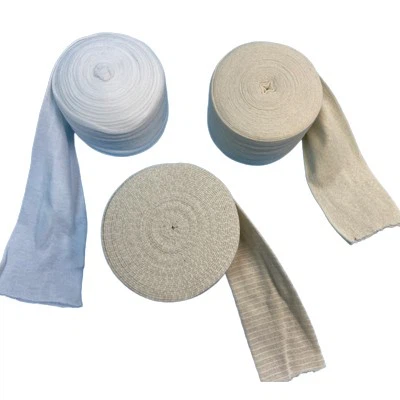
Tubular Medical Bandage
The Tubular Medical Bandage is commonly used for covering and protecting wounds on fingers, toes, and other small body parts. These bandages are easy to apply and provide a snug fit. For minor wounds on fingers or toes, a tubular medical bandage can be left on for 2 - 3 days. However, it is important to monitor the wound for any signs of infection, such as redness, swelling, or discharge. If any of these symptoms occur, the bandage should be removed immediately, and medical advice should be sought.
POP Plaster Bandage
POP Plaster Bandage is mainly used for immobilizing fractures. Once a POP plaster bandage is applied, it usually needs to stay on for a relatively long time, depending on the type and severity of the fracture. For simple fractures in adults, the plaster may need to be left on for 4 - 6 weeks. In children, due to their faster healing process, the duration may be shorter, usually around 3 - 4 weeks. During this time, it is essential to keep the plaster dry and to follow the doctor's instructions regarding weight - bearing and movement restrictions.
General Guidelines for Bandage Removal and Replacement
Signs for Bandage Removal
There are several signs that indicate it is time to remove a bandage. If the bandage is wet, soiled, or has an unpleasant odor, it should be removed immediately. A wet bandage can create a breeding ground for bacteria, increasing the risk of infection. Soiling can introduce new contaminants to the wound, and an odor may be a sign of an underlying infection.
Another sign is if the wound shows signs of excessive redness, swelling, pain, or discharge. These may be symptoms of an infection, and the bandage should be removed to allow for proper assessment and treatment of the wound.

Bandage Replacement
When replacing a bandage, it is important to follow proper hygiene procedures. Wash your hands thoroughly with soap and water before handling the bandage or the wound. Carefully remove the old bandage, taking care not to disturb the wound. Clean the wound gently with a mild antiseptic solution and pat it dry. Apply a new, clean bandage according to the type of wound and the instructions for the specific bandage.
Importance of Correct Bandage Usage
Proper bandage usage is essential for the successful healing of a wound. By keeping the bandage on for the appropriate duration, we can protect the wound from infection, provide support if needed, and promote a healthy healing environment. Incorrect bandage usage, such as leaving a bandage on for too long or removing it too early, can lead to complications such as delayed healing, infection, or even the formation of scar tissue.
As a bandage supplier, I understand the importance of providing high - quality bandages that meet the needs of different wounds. Our products are designed to be effective, comfortable, and easy to use. Whether you are a medical professional or an individual looking for a reliable bandage for a minor injury, we have a wide range of options available to suit your requirements.
Contact for Procurement
If you are interested in purchasing high - quality bandages for your medical facility, first - aid kit, or other needs, we invite you to contact us for procurement discussions. We offer a variety of bandages, including the ones mentioned above, and can provide you with detailed product information, pricing, and shipping details. Our team is dedicated to providing excellent customer service and ensuring that you get the right bandages for your specific needs.
References
- American Academy of Dermatology. (2023). Wound care basics.
- World Health Organization. (2022). Guidelines on hand hygiene in health care.
- National Institute of Health. (2023). Wound healing mechanisms and the role of bandages.


