
What is the tensile strength of sterile gauze compresses?
Leave a message

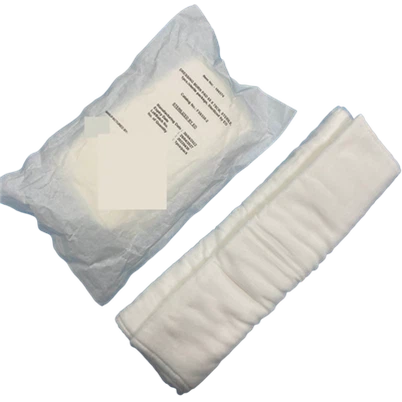
Hey there! As a supplier of sterile gauze compresses, I often get asked about the tensile strength of these essential medical products. So, let's dive right into it and explore what exactly the tensile strength of sterile gauze compresses is and why it matters.
First off, what is tensile strength? In simple terms, tensile strength is the maximum amount of stress a material can withstand while being stretched or pulled before it breaks. For sterile gauze compresses, this is a crucial property because they need to be strong enough to handle various medical procedures without tearing.
When it comes to medical applications, sterile gauze compresses are used for a wide range of tasks, from wound dressing to absorbing bodily fluids. During these processes, the gauze may be subjected to different levels of tension. For example, when wrapping a wound tightly, the gauze needs to hold up without ripping. If the tensile strength is too low, the gauze could tear easily, which not only makes the dressing process more difficult but also poses a risk of leaving behind gauze fragments in the wound, leading to potential infections.
The tensile strength of sterile gauze compresses can vary depending on several factors. One of the main factors is the material used to make the gauze. Most sterile gauze compresses are made from cotton, which is known for its good strength and absorbency. However, the quality of the cotton can vary. Higher - quality cotton fibers tend to have better tensile strength. Some manufacturers may also blend cotton with other fibers to enhance the strength and other properties of the gauze.
The weaving pattern of the gauze also plays a significant role in determining its tensile strength. A tighter weave generally results in a stronger gauze. For instance, a plain weave may have a different tensile strength compared to a twill weave. The density of the weave affects how the fibers are arranged and how they distribute the stress when the gauze is pulled.
Another factor is the thickness of the gauze. Thicker gauze usually has a higher tensile strength because there are more fibers to resist the pulling force. However, thicker gauze may also be less flexible, which could be a drawback in some applications.
To measure the tensile strength of sterile gauze compresses, standardized testing methods are used. These tests typically involve clamping a sample of the gauze at both ends and then applying a gradually increasing pulling force until the gauze breaks. The maximum force applied at the point of breakage is recorded as the tensile strength.
As a supplier, we take great care in ensuring that our Sterile Gauze Compresses meet the highest standards of tensile strength. We source high - quality materials and use advanced manufacturing techniques to produce gauze that is not only strong but also soft and absorbent.
Our team conducts regular quality control checks to ensure that each batch of sterile gauze compresses has the appropriate tensile strength. We understand that in the medical field, reliability is key, and our customers rely on our products to perform effectively.
In addition to sterile gauze compresses, we also offer Non Sterile Gauze Swabs for less critical applications. These swabs also have their own set of requirements for strength and absorbency, although the standards may be different from those of sterile products.
If you're in the market for high - quality sterile gauze compresses or non - sterile gauze swabs, we'd love to have a chat with you. Whether you're a hospital, a clinic, or a medical distributor, we can provide you with the products you need at competitive prices. Our team is always ready to answer any questions you may have about our products, including their tensile strength and other properties.
Contact us to discuss your specific requirements and start a procurement process. We're confident that our products will meet your expectations and help you provide the best possible care to your patients.
References:


- ASTM International. (2023). Standard Test Methods for Tensile Properties of Textile Fabrics.
- Textile Institute. (2022). Handbook of Textile Testing.